Showing posts with label Gettysburg. Show all posts

Wednesday, August 1, 2012

The Young Napoleon

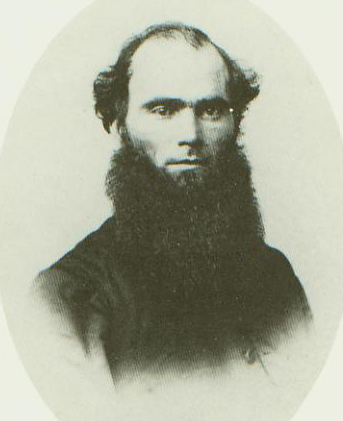
Confederate Major Joseph White Latimer died August 1st 1863 from wounds he received during the Battle of Gettysburg.

Joseph White Latimer was born August 27th 1843 in Oak Ridge, Prince William, Virginia.  He was attending the Virginia Military Institute and was in his second year at the school when the Civil War started.  While at VMI Latimer was taught artillery tactics by Thomas Jonathan Jackson.

When the war started Latimer left the school to join the Confederacy where he started in 1861 with the Richard Hampden Artillery.  He saw his first action in 1862 in the Shenandoah Valley Campaign as part of Confederate Major General Richard S Ewell’s division and was commissioned First Lieutenant.  Latimer distinguished himself and was given command of a battalion.  He was commanding at the Battle of Fredericksburg in December 1862.  In March 1863 he received a promotion to Major, with Ewell referring to him as “Young Napoleon”, however for most the nick name became “The Boy Major”.  His promotion placed him in Confederate Major Richard Snowden Andrew’s Battalion a part of Confederate Major General Edward “Allegheny” Johnson’s Division.  Andrew was wounded at the Battle of Stephenson’s Depot and this placed Latimer in command at the Battle of Gettysburg.

On the afternoon of July 2nd 1863 Latimer’s command was located on Benner’s Hill and was heavily engaged with Union artillery on Steven’s Knoll and East Cemetery Hill.  Latimer’s position on Benner’s Hill was exposed and while moving his guns off, he was wounded in the arm, the shot killing his horse which pinned him underneath.  Latimer was taken to the Daniel Lady Farm where his right arm was amputated.  When the Confederates retreated from Gettysburg he was moved to Winchester, and then again as the Union troops perused to Harrisonburg, Virginia.  While at the home of ETH Warren Latimer developed gangrene, he died August 1st 1863.  He is buried in Woodbine Cemetery in Harrisonburg.

Thursday, June 28, 2012

His Nickname Was Kill-Cavalry

Union General Judson Kilpatrick received an appointment on June 28th 1863 to command the Third Division of the Army of the Potomac’s Cavalry Corps.

Hugh Judson Kilpatrick was born on the family farm in Wantage, New Jersey on January 14th 1836 the son of Simon and Julia [Wickham] Kilpatrick.  He graduated just before the start of the Civil in from the United States Military Academy at West Point in 1861.  Kilpatrick received a commission to Second Lieutenant in First United States Artillery.

At the start of the Civil War Kilpatrick was made a Captain in Duryee’s Zouaves, the 5th New York Infantry.  He was wounded at the Battle of Big Bethel June 10th 1861, hit in the thigh while leading a company.  Kilpatrick was made a Lieutenant Colonel in the 2nd New York Cavalry in September 1861.  He was an aggressive, ambitious leader, who had a willingness to use up men and horses in suicidal charges, earning himself the nick name “Kill-Cavalry”.  In February 1863 Kilpatrick moved up to command of the First Brigade of the Second Division of the Army of the Potomac’s Cavalry.  During the Chancellorsville Campaign Kilpatrick made a ride around Lee’s Army burning bridges and reaching almost to Richmond, Virginia.

Kilpatrick fought at Brandy Station on June 9th 1863, receiving his commission to Brigadier General on June 13th 1863.  Three days before the Battle of Gettysburg June 28th 1863 he assumed command of a division.  Following Pickett’s Charge on July 3rd 1863 he ordered a controversial charge against the Confederate infantry located at base of Big Round Top in which Union Brigadier General Elon J Farnsworth was killed. 

In the spring of 1864 Kilpatrick was involved in the Dahlgren Affair.  After this he was sent to the Army of the Cumberland, where he was placed in command of the third Division of the Cavalry under Union Major General William Tecumseh Sherman.  Sherman said of Kilpatrick, "I know that Kilpatrick is a hell of a damned fool, but I want just that sort of man to command my cavalry on this expedition."  He started in the Atlanta Campaign and on May 13th 1864 was wounded at the Battle of Resaca badly enough he out of the fight until July 1864.

Following the war Kilpatrick became active in Republican politics.  President Andrew Johnson appointed him the Minister to Chile.  He married Luisa Fernandez de Valdivieso while in Chile.  Kilpatrick died while in Santiago, Chile December 4th 1881.  He is buried in the West Point Cemetery at West Point, New York.

Another web site you might want to look at for more about this is Judson Kilpatrick, Vernon's Civil War hero (sort of)

Thursday, June 14, 2012

The Leader Of The Irish

One of the leaders of the Union Irish Brigade, Colonel Patrick Kelly was killed June 14th 1864 while at the head of his men at the Siege of Petersburg.

Patrick Kelly was born about 1822 in Castlehacket, County Galway, Ireland.  He immigrated with his wife Elizabeth to New York City.

When the Civil War started Kelly enlisted, and was made a Captain in the 69th New York Infantry.  He saw his first action at the First Battle of Bull Run.  He was promoted to Lieutenant Colonel in the 88th New York Infantry on September 14th 1861, and had command of the regiment during the Battle of Antietam.  Kelly received his promotion to Colonel on October 20th 1862.  He led the regiment in its failed frontal attack of Marye’s Heights at the Battle of Fredericksburg.  Following the Battle of Chancellorsville, the commander of the Irish Brigade Union Brigadier General Thomas Francis Meagher resigned and Kelly was placed in command of the brigade.  The Irish Brigade with Kelly saw heavy fighting in the Wheatfield at Gettysburg, losing 37% of the Brigade.  As the Union Army was reorganized more senior officers returned and Kelly went back to leading his regiment.  At the Battle of Cold Harbor, with the death of Union Colonel Richard Byrnes in June 1864, Kelly was placed back in command of the Irish Brigade.

 Kelly was leading the Irish Brigade on June 14th 1864 during the Siege of Petersburg.  They were moving on some Confederate earthworks when he was shot in the head and killed.  His body was taken back to New York City, where Kelly is buried in the First Calvary Cemetery in Woodside, New York.

For more information about Patrick Kelly check out the web site News from the Irish Brigade Asscciation

Thursday, November 24, 2011

They Leapt The Lines

Fort Connor
A part of Union Brigadier General George Armstrong Custer’s Michigan Brigade, the 6th Michigan Cavalry was mustered out of service November 24th 1865.

The 6th Michigan Cavalry was organized in Grand Rapids, Michigan, and mustered into Union service October 13th 1862 with 1,229 men.  The 6th was part of the famed Michigan Brigade, and saw it first actions at Hanover, Hunterstown and Gettysburg under the command of Union Brigadier General George Armstrong Custer.  The 6th made a notable charge against the retreating Confederates at Falling Waters, Maryland July 14th 1863, where they leapt their horse over the Confederate lines.
Once the Civil War ended the 6th was ordered to duty in west to fight Indians.  They received a new commander, Brigadier General Patrick Edward Connor.  They spent the summer constructing Fort Connor, a supply depot that was used during the Powder River Expedition.  The 6th mustered out of service November 24th 1865.  They lost 135 officers and enlisted who were killed in action or died of their wounds.  They also saw 251 men die from diseases.

For more information take a look at this web site  6th Regiment Michigan Volunteer Cavalry

Monday, October 24, 2011

The Little Gamecock


Confederate General James Jay Archer died October 24th 1864 from an illness he developed while a Prisoner of War.

James Jay Archer was born December 19th 1817 near Havre de Grace, Maryland the son of John and Ann [Stump] Archer.  He attended Princeton University; where he picked up the nickname “Sally” do to his small stature.  Archer graduated in 1835 and attending Bacon College in Georgetown, Kentucky he went on to study law at the University of Maryland.  He had a successful law practice going when the Mexican American War broke out.  Archer volunteered for service and was cited for bravery at Chapultepec, receiving a brevet to Major.  He moved to Texas following the war in 1848 were he was wounded in a duel.  Archer returned to law in Maryland, but decided in 1855 to join the United States Army as a Captain in 9th US Infantry.  He served mostly in the Pacific Northwest.

When the Civil War started Archer was at Fort Walla Walla in Washington Territory.  He resigned March 14th 1861, and shortly after was a member of the Confederate Army.  Archer was made a Colonel in the 5th Texas Infantry, and served with excellence at the Battle of Eltham’s Landing and Seven Pines.  On June 3rd 1862 he was promoted to Brigadier General and given command of three Tennessee regiments.  They fought as part of Major General A P Hill’s “Light Division” at Cedar Mountain and Second Bull Run, where he had a horse shot from under him.  His men called him “The Little Gamecock”.  Archer was to sick to ride a horse during the Maryland Campaign of September 1862, and led them from an ambulance.  His men contributed to the victories at the Battles of Fredericksburg and Chancellorsville.  By the summer of 1863 Archer’s brigade was part of Major General Henry Heth’s Division, A P Hill’s Corps.
On July 1st 1863 Archer was taken prisoner at the Battle of Gettysburg.  Union Private Patrick Maloney of the 2nd Wisconsin captured him, making Archer the first general to be captured in the Confederate army since General Robert E Lee took command.  Archer was sent to Johnson’s Island on Lake Erie where the Ohio winter cause his health to decline.  After a year at the Fort Johnson prisoner of war camp, Archer was sent with 600 other Confederate officers to Charleston Harbor.  He was exchanged late in the summer of 1864.  He rejoined the Confederate army on August 9th 1864 as part of the Army of Tennessee, but due to his poor health was order to Petersburg, Virginia.  He collapsed following the Battle of Peebles’ Farm.  Archer died October 24th 1864 in Richmond, Virginia and is buried Hollywood Cemetery.

Tuesday, July 12, 2011

Served For Almost Four Years

The 5th Wisconsin a Union infantry regiment was formed July 12th 1861 in Madison, Wisconsin.


The 5th Wisconsin Infantry was formed at Camp Randall in Madison, Wisconsin July 12th 1861. The regiment left for Washington, DC July 24th 1861, where they went into camp on Meridian Hill. The 5th was assigned to Winfield Scott Hancock’s Brigade in the Army of the Potomac. This group saw action in many of the battles of eastern theater including Antietam, Fredericksburg, and Gettysburg. In August and September of 1863 they were placed on detached duty in Albany and Tory, New York as part of the surpresion of the draft riots. The 5th was present at Appomattox when Confederate General Robert E Lee surrendered. The unit served until June 24th 1865 and were mustered out of service July 11th 1865.

The 5th mustered in 1108 men, and add another 832 so the regiment totaled 1940 men. During the course of the war they had 17 officers and 332 enlisted who were killed or died from wounds and diseases.

Thursday, June 30, 2011

The Northern Most

General Ewell
A little known part of the Gettysburg Campaign, the Skirmish of Sporting Hill took place June 30th 1863 near Hampden, Pennsylvania.


Confederate Lieutenant General Richard S Ewell led two divisions and a cavalry brigade into Pennsylvania in June 1863. He was moving on Harrisburg, Pennsylvania the state capital. As Ewell’s troops moved slowly north, Union Major General Darius N Couch sent troops to Camp Hill about two miles west of Harrisburg. Men hired by Couch erected fortification on the western side of Camp Hill.

Confederate Brigadier General Albert Gallatin Jenkins’ cavalry skirmished with the 22nd and 37th New York at Sporting Hill on June 30th 1863. The Confederate cavalry used the McCormick House for cover. The cavalry tried to cross the Carlisle Pike but were outflanked by Union soldiers. Union soldiers began firing on the McCormick barn with two cannons, smashing in the wooden building, and sending about 50 Confederate cavalry out to their horses. The soldiers withdrew toward Carlisle where they joined back up with Ewell’s troops for the march into Gettysburg.

A very good web site for more information about this battle is Gettysburg Campaign [Sporting Hill]

Wednesday, January 12, 2011

A Confederate Family Twig

Confederate General Joseph Robert Davis, the nephew of Confederate President Jefferson Davis was born January 12th 1825.

Joseph Robert Davis was born in Woodville, Wilkinson, Mississippi, January 12th 1825 the son of Isaac William and Susannah [Gartley] Davis. Isaac was the older brother of Confederate President Jefferson Davis. Joseph was educated in Kentucky and then went on to graduate from Miami University in Ohio. He returned to Madison County, Mississippi were he married and opened a law practice.

When the Civil War started Davis entered the Confederate army as a Captain in the 10th Mississippi Infantry. He served in the Pensacola, Florida area before becoming the aide-de-camp for President Jefferson Davis. Davis received a promotion to Brigadier General on September 15th 1862. There were critics who felt his promotion was a case of nepotism. Davis had command of a brigade which patrolled the Richmond and southeastern Virginia area. In the Spring of 1863 Davis was assigned to Henry Heth’s Division of the Army of Northern Virginia. He was in command of the 42nd, 11th, 2nd Mississippi and 55th North Carolina. Davis’ Brigade saw action early on July 1st 1863 on the first days Battle of Gettysburg. Davis saw many of his men killed or captured in the railroad cut on McPherson‘s Ridge. What was left of his brigade took part in the Pickett - Pettigrew - Tremble Charge on July 3rd 1863. Davis served through out the war seeing action at the many battles that the Army of Northern Virginia participated in, and was present at their surrender at Appomattox Courthouse.

After the war Davis returned to Mississippi where he continued with his law practice, and was a Mississippi State Senator. He died in Biloxi, Mississippi and is buried in the Biloxi Cemetery.

Tuesday, December 28, 2010

Absolution To The Irish Brigade

The priest who gave a general absolution at Gettysburg, Reverend William Corby died December 28th 1897.


William Corby was born October 2nd 1833 in Detroit, Michigan the son of Daniel and Elizabeth Corby. He was a priest of the Congregation of Holy Cross. Corby served during the Civil War as a military Chaplin. He is best know for giving absolution to the Irish Brigade before they went into battle at the Stony Hill July 2nd 1863 on the second day of the Battle of Gettysburg. Following the war Corby served at the President of University of Notre Dame, where Corby Hall is named for him. He died December 28th 1897, and is buried in the Basilica of the Sacred Heart at Notre Dame, Indiana.

A couple of other web sites about the Rev’s life that I like, Rev. William Corby and The Very Rev. William Corby, C. S. C.

Monday, December 27, 2010

New Jersey Medal Of Honor Winner

Union Major General and Medal of Honor winner William Joyce Sewell died December 27th 1901.


William Joyce Sewell was born December 6th 1835 in Castlebar, Mayo, Ireland. He immigrated to the United State in 1851, working first in Chicago, Illinois as a merchant, before moving to Camden, New Jersey in 1860.

When the Civil war started he joined the 5th New Jersey Infantry, and rose to command with the rank of Colonel. Sewell saw action in the Peninsular Campaign and at Second Bull Run. His Medal of Honor which was awarded in 1896 came from his assuming command of a brigade during the Battle of Chancellorsville May 3rd 1863, when Brigadier General Gershom Mott was wounded and had to leave the field. Sewell rallied the men and led a successful counterattack. Sewell was wounded July 2nd 1863 during the Battle of Gettysburg while with his unit along the Emmitsburg Road. He would receive a promotion to Major General March 13th 1865 for his "gallant and meritorious services during the war".

After the war Sewell worked in the railroad industry in New Jersey. He was a New Jersey state senator from 1872 to 1881. As a republican Sewell served in the United States Senate from 1881 to 1887, and then again in 1895. He was a commissioner for New Jersey at the World’s Columbian Exposition, commander of the 2nd New Jersey National Guard, and on the board of the National Home for Disabled Volunteer Soldiers. Sewell died in Camden, New Jersey December 27th 1901, and is buried in Harleigh Cemetery there.

Wednesday, December 22, 2010

The Man Who Made Gettysburg

John Badger Bachelder an artist and the preeminent early historian of the Battle of Gettysburg died December 22nd 1894.

John Badger Bachelder was born September 29th 1825 in Gilmanton, New Hampshire. He attended Captain Alden Partridge’s Military School in Pembroke, New Hampshire. After graduation he moved to Reading, Pennsylvania, where he took a job at the Pennsylvania Military Institute. Bachelder joined the Pennsylvania State Militia while at the school and was a Colonel by 1852. In 1853 Bachelder married Elizabeth Barber in New Hampshire where he began his career in art. He liked military topics for his art and was working a piece about Bunker Hill when the Civil War started. Bachelder accompanied the Union Army of the Potomac. He studied battlefields, interviewed participants of the battles. He seems to have been well liked, and welcomed by the leaders of the Union Army.

Bachelder’s life work came after the Battle of Gettysburg. Following the Battle he road the field on horseback, interviewed the wounded, plotted where the units where located and drew an isometric map of the battlefield. Bachelder spent the winter interviewing the Union commander who had been on the field in Gettysburg. As the years went by, Bachelder organized reunions, and he would accompany the veterans placing stakes at important points of the battle. He published a guidebook of the Battle in 1873. From 1883 through 1887 Bachelder was the Superintendent of Tablets and Legends, responsible for the placements of monuments on the Gettysburg Battlefield. President Rutherford B Hayes signed a bill for $50,000 in 1880 for Bachelder to write a history of the Battle of Gettysburg, which he sent to Washington DC in October 1886.

Bachelder died December 22nd 1894 in Hyde Park, Massachusetts of pneumonia. He is buried in the Stevens Hill Road Cemetery, in Nottingham, New Hampshire.

Thursday, December 16, 2010

He Held The Ground At Gettysburg

Union Cavalry officer Brigadier General John Buford Jr died December 16th 1863.

John Buford Jr was born March 4th 1826 in Versailles, Woodford, Kentucky. When he was eight the family moved to Rock Island, Illinois. Buford attended Knox College in Galesburg, Illinois for one year before getting an appointment to the United State Military Academy at West Point. He graduated 16th out of 38 in the class of 1848. Buford was commissioned Second Lieutenant in the United States Dragoons and served in Texas, and as part of the peacekeeping in Kansas and in Utah.

When the Civil War started in 1861, Buford chose to stay with the Union, despite having several relatives who sided with the Confederacy. With the rank of Major in November 1861 Buford was appointed assistant inspector general of the defenses of Washington, DC. In 1862 he was promoted in rank to Brigadier General and posted under Major General John Pope as commander of the Cavalry II Corps Union Army of Virginia. They fought with distinction at the Second Battle of Bull Run. Buford was wounded in the knee, it wasn't serious but was painful. When he returned to service it was in a staff position and he wanted a field command. In 1863 when Major General Joseph Hooker took over the Army of Potomac, Buford was given the Reserve Brigade of Cavalry in the 1st Division. He led his new division at the Battle of Brandy Station June 9th 1863.

On July 1st 1863 Buford set up his troops west of the town of Gettysburg. The Cavalry mostly fighting dismounted, they held off a superior number of Confederates at Gettysburg, until the Union Army’s 1st Corps could come up and deploy. During the Confederate retreat from Gettysburg, Buford’s Cavalry pursued the Confederates, in Warrenton, Virginia, they engaged them several times. Then his men covered Union Major General George Gorden Meade’s retrograde movement in the Bristoe Campaign in October 1863.

Buford contracted Typhoid during the Rappahannock Campaign and by December 1863 it was obvious he was dying. He went to Washington DC to the home of his friend General George Stoneman. On December 16th 1863 at Stoneman’s request President Abraham Lincoln promoted Buford to Major General, for meritorious and distinguished service at the Battle of Gettysburg. At the end of his life he was surround by many old friends, but his wife Pattie traveling from their home in Rock Island, Illinois didn't get there in time. Buford died December 16th 1863. His body was transported to West Point for burial, in the United State Military Academy Post Cemetery.

Saturday, December 11, 2010

The Father Of Battlefield Medicine

Jonathan Letterman the “Father of Battlefield Medicine”, a Union surgeon during the Civil war was born December 11th 1824.

Jonathan Letterman was born December 11th 1824 in Canonsburg, Pennsylvania, the son of a surgeon. He graduated from Jefferson Medical College in 1849. That same year Letterman excepted a position as assistant surgeon of the United States Army Medical Department. He served during the Seminole Indian Campaign in Florida, at Fort Ripley, Minnesota, Fort Defiance in the New Mexico Territory, Fort Monroe, Virginia, and in California through 1861.

At the beginning of the Civil War, Letterman was assigned to the Union Army of the Potomac, with the rank of Major. Receiving permission from Major General George B McClellan, Letterman reorganized the Medical Service. The Union Army was grossly inefficient in handling casualties from the Seven Days Battle, and Letterman saw the need for changes. By the Battle of Antietam, he had set up regimental aid stations, the use of triage, field hospitals, and an ambulance corps. The system was so proficient that an Act of Congress in March 1864 established it as the Union Armies medical procedure. The Battle of Gettysburg in July 1863 left over 20,000 Union and Confederate wounded, and the vast medical encampment set up on the George Wolf farm was named for Letterman.

Letterman ended his military service as the Inspector of Hospitals, he resigned in December 1864. He moved to San Francisco, California where he was a coroner until 1872. He wrote a memoir in 1866, “Medical Recollections of the Army of the Potomac”. Following the death his wife, Letterman became quite sick, and died March 15th 1872 in San Francisco, California. He is buried in Arlington National Cemetery.

Thursday, December 9, 2010

Established To Find Out Why There Was A Defeat

The Joint Committee on the Conduct of the War; established December 9th 1861, was set up to investigate issues related to the Civil War.

The United State Congress set up the Joint Committee of the Conduct of the War to investigate and handle issues surrounding the Civil War on December 9th 1861. Established after the Union defeat at the Battle of Ball’s Bluff on the insistence of United States Senator Zachariah T Chandler. The purpose of the Committee was to investigate such things as illegal trade with Confederate States, military contracts, medical treatment of soldiers, and the causes of Union losses. The Committee also endorsed emancipation, the use of black soldiers, and the appointment of Generals. The Committee was chaired by United States Senator Benjamin Wade. Union officers disliked being call in front of the Committee. As it was a Civil War were brother’s and neighbors fought each other, the Committee looked into loyalty issues of Union soldiers.

The Committee held 272 meetings during its existence. The meeting were held in secrecy, with the testimony published irregularly in committee reports. One of the Committee’s notorious hearings followed the Battle of Gettysburg when Major General Daniel Sickles accused Major General George Gorden Meade of mismanaging the battle. Once the war ended the Committee ceased to operate, it was more or less replaced by the Joint Committee on Reconstruction.

Friday, November 19, 2010

Two Hundred Seventy-One Words

President Abraham Lincoln gave his few appropriate remarks at the dedication of the Gettysburg National Cemetery November 19th 1863.


Four month after the Union victory at the Battle of Gettysburg, President Abraham Lincoln gave what is probably one of the best known speeches in history, to dedicated the Soldier‘s National Cemetery. Lincoln’s few remarks were given in just over two minutes on November 19th 1863. He arrived in Gettysburg Pennsylvania by train the day before. Lincoln spent the night in the David Will’s house, where he put the final touches on his speech. At 9:30 on the morning of November 19th Lincoln along with Secretary of State William H Seward and Secretary of the Treasury Salmon P Chase joined the procession traveling down Baltimore Street to the dedication.

It is estimated that 15,000 people attended the ceremony, including six sitting governors, and a Canadian politician William McDougall. The re-interment of Union bodies was only about half completed at the time of the ceremony. Following the featured speaker for the day, Edward Everett, Lincoln spoke for just a few short minutes, summing up the war in 271 words “The Gettysburg Address.”

“Four score and seven years ago our fathers brought forth on this continent, a new nation, conceived in Liberty, and dedicated to the proposition that all men are created equal.

Now we are engaged in a great civil war, testing whether that nation, or any nation so conceived and so dedicated, can long endure. We are met on a great battle-field of that war. We have come to dedicate a portion of that field, as a final resting place for those who here gave their lives that that nation might live. It is altogether fitting and proper that we should do this.

But, in a larger sense, we can not dedicate -- we can not consecrate -- we can not hallow -- this ground. The brave men, living and dead, who struggled here, have consecrated it, far above our poor power to add or detract. The world will little note, nor long remember what we say here, but it can never forget what they did here. It is for us the living, rather, to be dedicated here to the unfinished work which they who fought here have thus far so nobly advanced. It is rather for us to be here dedicated to the great task remaining before us -- that from these honored dead we take increased devotion to that cause for which they gave the last full measure of devotion -- that we here highly resolve that these dead shall not have died in vain -- that this nation, under God, shall have a new birth of freedom -- and that government of the people, by the people, for the people, shall not perish from the earth. “

Wednesday, November 17, 2010

The Farmer Statesman

Union General Andrew Lintner Harris the last Civil War General to serve as a United States Governor, was born November 17th 1835.


Andrew Lintner Harris was born November 17th 1835 in Milford, Butler, Ohio. He was the son of Benjamin and Nancy [Lintner] Harris. He attended local schools and graduated from Miami University in 1860. He returned home to farm and read for the bar at the law firm of Thompson and Harris in Eaton Ohio.

When the Civil War began Harris enlisted in the Union Army as a private. He rose in rank quickly and was soon the Colonel of the 75th Ohio Infantry. Harris had command of a brigade at Gettysburg, and defended Cemetery Hill on the evening of July 2nd 1863 against the famed Louisiana Tigers. He would see action in eighteen major battles, and was wounded several times. Harris was mustered out of service January 15th 1865. He received a brevet to Brigadier General for “gallant and meritorious” service in 1866.

Following the war Harris took up the practice of law. He served in the Ohio State Senate, and as the Preble County Ohio Probate Judge from 1875 to 1882. In 1889 he was a trustee of the Ohio Soldiers’ Sailors’ and Orphans’ Home. Harris was the 23rd and the 29th Lieutenant Governor of Ohio. He was a Republican, and active in the temperance movement. He served the State of Ohio as Governor, after the death of Governor John M Pattison on June 18th 1906. Harris was nominated again in 1909, but lost to Warren G Harding. He was the last civil war veteran to serve as a Governor. Harris, often called the “Farmer Statesman” died on his farm of heart problems September 13th 1915.

Tuesday, November 16, 2010

Remebering The Ladies

The Gettysburg Civil War Women’s Memorial was dedicated in the Evergreen Cemetery on November 16th 2002.


A bronze monument; the Gettysburg Civil War Women’s Memorial; modeled on Elizabeth Thorn, as a memorial to all the ladies who did as much and they could during and after the battle was dedicated November 16th 2002. Thorn was about thirty at the time of the Battle of Gettysburg, with three small children and was six months pregnant for a fourth. Her husband was the caretaker of the Evergreen Cemetery along Cemetery Ridge and family lived in the gatehouse. She and her family were forced to flee the gatehouse, their home during the battle. At the time of the battle Thorn’s husband was away serving with the 138th Pennsylvania Infantry. Following the three day battle she returned to find her home ransacked. Thorn began burying the dead on and around the cemetery, 91 in all. She would continue to mange the cemetery until her husband returned home in 1865. Thorn and her husband are buried in the cemetery that she took care of during those trying days.

The memorial is about seven feet tall, cast from bronze it weighs about a ton. It was designed by sculptor Ron Tunison. This is the fourth monument Tunison has on the Gettysburg Battlefield.

Monday, November 15, 2010

He Left West Point

Confederate Major General Pierce Manning Butler Young was born November 15th 1836.


Pierce Manning Butler Young the son of doctor R M Young, was born November 15th 1835 in Spartanburg South Carolina. The family moved when Young was a child to Cartersville, Bartow County Georgia, where his father hired private tutors for his children. At thirteen he began attending Georgia Military Institute, then in 1857 Young received an appointment to the United State Military Academy at West Point. He was a few months short of graduation in 1861, when Georgia seceded and he resigned.

Young was appointed Second Lieutenant in the 1st Georgia Infantry, upon his return home. In July he was attached to Confederate General Braxton Bragg’s staff. By November Young was a Lieutenant Colonel and commanding cavalry in Cobb’s Legion. His unit was attached to Wade Hampton’s brigade which was part of JEB Stuart’s cavalry. Young was promoted to Colonel for service at the Battle of Brandy Station and Huntertown Pennsylvania, which was part of the Gettysburg campaign. He was wounded in August 1863, and promoted to Brigadier General shortly after, Young took over command Hampton’s brigade. The brigade saw more action at Bristoe Station and in the Mine Run Campaign. Young’s final promotion came in December 1864 while in defense of Savannah to Confederate Major General.

Following the Civil War Young returned to Georgia and took up the life of a planter. He served four terms in the United State House of Representatives, as a consul-general in Russia and the Untied States Minister to Honduras and Guatemala. Young died in New York City July 6th 1896.

Saturday, November 13, 2010

A Month Long Infection

Confederate General Carnot Posey was mortally wounded at the Battle of Bristoe Station, and died November 13th 1863.

Carnot Posey the son of John Brooke and Elizabeth [Screven] Posey was born August 5th 1818 near Woodville, Wilkinson County, Mississippi. He studied the law at the University of Virginia, setting up a practice in Woodville. In May 1840 he married Mary Collins and they had two children before she died four years latter.

Posey excepted a commission of First Lieutenant in the 1st Mississippi Rifles at the start of the Mexican American War. He was wounded at the Battle of Buena Vista. Following the war he returned to Woodville, where he married Jane White. Posey took an appointment as the District Attorney of Southern Mississippi from President James Buchanan, a position he held until 1861.

When the Civil War began Posey became the Colonel of the 16th Mississippi. He was wounded at the Battle of Cross Keys during the Valley Campaign. His regiment successfully repelled an Union attack at Fredericksburg, and Posey received a promotion to Brigadier General. His brigade had limited action at the Battle of Chancellorsville. As a part of General Ambrose Powell Hill’s third Corps; Posey’s brigade took part of the July 2nd 1863 Battle of Gettysburg in the fight on Cemetery Ridge. He was wounded in left leg at the Battle of Bristoe Station on October 14th 1863. He received medical attention at Culpeper Court House, but the leg became infected. After fighting the infection for a month, Posey died at the house of a friend, Dr John Davis in Charlottesville, Virginia November 13th 1863. He is buried in the cemetery at the University of Virginia.

Friday, November 12, 2010

He Gave An Arm To The Cause

Confederate Brigadier General Robert Doak Lilley died November 12th 1886.


Robert Doak Lilley was born January 28th 1836 near Greenville Virginia, the son of James M Lilley. He came from a long standing military family. Lilley received an education at Washington College, and then began selling surveying equipment invented by his father.

When the Civil War started in 1861 Lilley became a Captain in the 25th Virginia Infantry, known as “Lee’s Rifles”. Lilley received commendations for his actions during the Battles of Cedar Mountain and Second Battle of Manassas. In January 1863 he was promoted to Major, and following the Battle of Gettysburg where he was again cited to Lieutenant Colonel. Lilley was wounded three times and lost an arm. He was seriously wounded and captured during the Battle of Stephenson’s Depot July 20th 1864. Four days latter he was rescued at Winchester. Lilley surrendered with the rest of the Confederate Army and was paroled May 23rd 1865 at Staunton Virginia.

Following the war Lilley returned to Washington College [renamed Washington and Lee College] as their financial officer. He died November 12th 1886 in Richmond Virginia of paralysis. He is buried in the Thornrose Cemetery in Staunton Virginia.