Showing posts with label Battle of Antietam. Show all posts

Sunday, March 30, 2014

An Engineer And Soldier

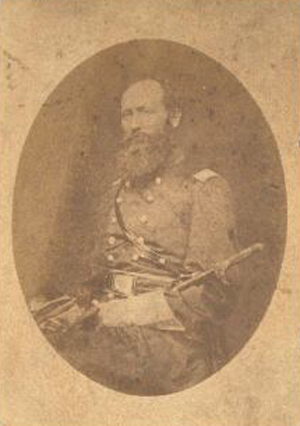
John Newton received his appointment to Union Major General March 30th 1863.

John Newton was born August 25th 1822 in Norfolk, Virginia the son of United States Congressman Thomas and Margaret (Jordan) Newton Jr.  He attended the United States Military Academy at West Point, graduating second in the class of 1842.  He was commissioned in the Corps of Engineers and taught the subject from 1843 to 1846 at the Academy.  After which Newton served in engineering work along the Atlantic coast, the Great Lakes, and the Gulf Coast.

When the Civil War began, Newton stayed loyal to the Union.  He helped with the construction of the defenses of Washington, DC.  He was leading a brigade during the Peninsula and Maryland Campaigns, and fought at the Battle of Antietam.  Newton had become a division commander in the VI Corps by the Battle of Fredericksburg.  He was among the officers who traveled to Washington, DC to complained to United States President Abraham Lincoln of their lack of confidence in their commander; Union Major General Ambrose E Burnside.  On March 30th 1863 Newton was appointed Major General.  He was wounded during the Chancellorsville Campaign at Salem Church.  During the Battle of Gettysburg Newton took command of the I Corps of the Army of the Potomac after the death of Union Major General John F Reynolds, and would continue in that position until the army was reorganized in 1864.  He was then placed in commanded of a division in the IV Corps during the Atlanta Campaign.  After this he was moved to command of the District of Key West, with his last campaign of the war a defeat at the Battle of Natural Bridge in Florida in March 1865.


After the war Newton returned to the Corps of Engineers.  He would oversee the improvements of the waters around New York City, and the Hudson River south of Albany, New York.  He was appointed Chief of Engineers in 1884.  On October 10th 1885 Newton used 140 tons of dynamite and blew up New York’s Hell Gate Rock.  He retired from the Army in 1886, serving as a Commissioner of Public Works in New York City, and as President of the Panama Railroad Company.  Newton died May 1st 1895 in New York City, New York, and is buried in the cemetery at West Point.

Wednesday, March 26, 2014

An Adventuring Spirit

Union General Augustus Wade Dwight was killed March 26th 1865 in the attack on Fort Steadman.

Augustus Wade Dwight was born in Halifax, Vermont February 22nd 1827, the first child born to Morris and Minerva (Bryant) Dwight.  The family moved in 1829 so his father could practice medicine in Cummington, Massachusetts, then to Poughkeepsie, New York in 1839 and finally in 1840 to LaFayette, New York.  Dwight started at Yale College in 1851, but a lack of funds caused him leave by the second semester.  He went west to California, caught up in the gold rush.  While in California he studied for the law.  His adventuring spirit found him on a ship to Hawaii, then onto China, and finally back to the United States having circumnavigated the globe.  By 1859 Dwight had settle in Onondaga County, New York and had been admitted to the bar.

In 1862 when Lincoln called for more troops, Dwight volunteered.  He was made the Captain of Company E of the 122nd New York Infantry July 1862.  By August of 1862 he was promoted to Lieutenant Colonel under Colonel Silas Titus.  The regiment’s and Dwight’s first engagement was at the Battle of Antietam, where they were held in reserve.  The first heavy fighting came at the Battle of Gettysburg on Culp’s Hill.  Dwight sent reports of the war to the “Syracuse Journal” a local newspaper, as well as writing letters to relatives of men killed in action.  He was wounded the first time September 19th 1864 at the Battle of Opequon in the right thigh, then at the Battle of Cedar Creek a ball shattered his right wrist, and he was sent home to recover.  He rejoined his regiment in February 1865 in front of Petersburg, replacing Titus in command of the regiment.


In the early morning hours of March 26th 1865 the Confederates launched an attack on Fort Stedman, initially capturing the Union Fort.  The Union troops would retake the Fort, and in the afternoon Dwight’s regiment was ordered to take some Confederate trenches that had been weakened by the attack.  As the men moved forward, Dwight was hit in the head by artillery fire and killed instantly.  His body was returned home and is buried in the Oakwood Cemetery in Syracuse, New York.

Saturday, March 22, 2014

A Long Serving Military Man

Union Captain George Lucas Hartsuff was appointed assistant adjutant general March 22nd 1861 under the duty of General William S Rosecrans in West Virginia.

George Lucas Hartsuff was born May 28th1830 in Tyre, New York.  He moved with his family in 1842 to Michigan.  He received an appointment to the United States Military Academy at West Point, graduating 19th in the class of 1852.  Hartsuff served in Texas and Florida and was wounded during the Seminole Indian Wars.  He survived the wreck of the steamer “the Lady Elgin” on Lake Michigan in September 8th 1860, while serving at Fort Mackinac.

When the Civil War started Hartsuff was sent on an expedition in April 1861 to reinforce Fort Pickens in Pensacola, Florida.  He received an appointment on March 22nd 1861 to Assistant Adjutant General under Union General William S Rosecrans in West Virginia, even briefly serving as Chief of Staff in the Mountain Department.  He was promoted to Brigadier General April 15th 1862, serving in the III Corps of the Armies of Virginia and the Potomac, where he would lead men at the Battles of Cedar Mountain and Second Bull Run.  He was wounded in the hip during the Battle of Antietam.  With another promotion to Major General, Hartsuff was back in duty, commanding the XXIII Corps in the Army of the Ohio by May 28th 1863.  At the end of the Civil War he was commanding the defenses at Bermuda Hundred in the Army of the James.


Hartsuff mustered out of the Union volunteer army and went back to service in the United States Army on August 24th 1865 with the rank of Lieutenant Colonel.  Do to disabilities relating to old battle wounds he resigned his command on June 29th 1871.  Hartsuff left the service with the rank of Major General.  He died of pneumonia May 16th 1874 in New York City and is buried in the United States Military Academy Post Cemetery at West Point.

Friday, December 13, 2013

Advanced Even After His Loss

Union Brigadier General Conrad Feger Jackson was killed in action December 13th 1862 during the Battle of Fredericksburg.

Conrad Feger Jackson was born in Alsace Township, Berks County, Pennsylvania, September 11th 1813 the son of Isaac Jackson a part of a family of Quakers.  His father died when he was young and he was raised by an uncle; Joseph Jackson, in Chester County, Pennsylvania.  Jackson started working in warehouse in Philadelphia, Pennsylvania, and then moved onto working as a conductor for the Philadelphia and Reading Railroad.  During the Mexican American War, Jackson carried dispatches for General Winfield Scott.  He would settle after the war in Pittsburgh, Pennsylvania before moving in the late 1850’s to become the manager of an oil company in the Kanawha Valley area of Virginia.

When the Civil War started Jackson went back to Pittsburgh where he organized the 9th Pennsylvania Reserve Infantry.  He received an appointment from Pennsylvania Governor Andrew G Curtin as the Colonel of the 9th, leading them with distinction during the Peninsula Campaign.  He was promoted July 17th 1862 to Brigadier General and placed in command of the 3rd Brigade of the Pennsylvania Reserves.  They would see action at Second Bull Run, South Mountain and Antietam.

As the Union Army moved against the Confederates at Fredericksburg, Jackson led his Brigade against the right wing of the Confederates.  His Division commander Union General George G Meade wrote of their movement, “The Third brigade had not advanced over one hundred yards when the battery on the height on its left was re-manned, and poured a destructive fire into its ranks. Perceiving this, I dispatched my Aide-de-camp, Lieutenant Dehon, with orders for General Jackson to move by the right flank till he could clear the open ground in front of the battery, and then, ascending the height through the woods, sweep round to the left and take the battery. Unfortunately Lieutenant Dehon fell just as he reached General Jackson, and a short time after, the latter officer was killed. The regiments did, however, partially execute the movement by obliquing to the right, and advanced across the railroad, a portion ascending the heights in their front. The loss of their commander, and the severity of the fire, from both artillery and infantry, to which they were subjected, compelled them to withdraw."


Jackson was killed December 13th 1862.  His body was recovered from the field and taken back to Pittsburgh.  He is buried in the Allegheny Cemetery there.

Monday, November 25, 2013

McClellan's Headquarters Guard

The Sturges’ Rifles a company of Illinois militia were mustered out of Union service November 25th 1862.


The Sturges’ Rifles were a company of Illinois sharpshooters who mustered into the Union army May 6th 1861.  The company was organized in Chicago, Illinois.  A Solomon Sturgis saw to it that the men were equipped and armed with Sharps rifles.  They served from June 1861 with Union Major General George B McClellan as his headquarters guard and they served with him until he lost his command.  McClellan had been a member of the company before the start of the Civil War.  The men saw action in the Battle of Rich Mountain, the Peninsula Campaign, and Antietam.  The company was mustered out of service November 25th 1862, having lost just one man.

Sunday, October 20, 2013

The Youngest Confederate General

Confederate Major General Stephen Dodson Ramseur died October 20th 1864 from wounds received the day before at the Battle of Cedar Creek.

Stephen Dodson Ramseur was born May 31st 1837, the son of Jacob Able and Lucy Mayfield (Dodson) Ramseur in Lincolnton, North Carolina. His family and friends knew him as Dod.  Ramseur studied math at Davidson College, and then finished his education at the United States Military Academy at West Point.  He graduated in 1860, ranked 14th in his class, he was commissioned Second Lieutenant in the United States Artillery.

Ramseur resigned his commission and joined the Confederate Army before his home state had even seceded.  On May 27th 1861 he was made Lieutenant Colonel in the 3rd North Carolina Infantry.  During the Peninsula Campaign Ramseur commanded the artillery in Confederate Brigadier General John B Magruder’s division.  In April 1862 he became the Colonel of the 49th North Carolina Infantry.  He led a charge and was wounded during the Battle of Malvern Hill.  Ramseur was unable to return to duty until after the Battle of Antietam, when he was given command of a brigade of four North Carolina regiments in Confederate Brigadier General Robert E Rodes’ division.  On November 1st 1862, Ramseur would be promoted to Brigadier General, and at only 25 was the youngest Confederate General at the time.  He led his brigade against the Union right at the Battle of Chancellorsville, and he would be wounded again.  At the Battle of Gettysburg he led his brigade against the right flank of the Union First Corps on Oak Hill, pushing them all the way through the town to Cemetery Hill.  Ramseur was in the action at the Battles of Wilderness, Spotsylvania Court House, and Cold Harbor.


Ramseur was part of Confederate General Jubal A Early’s Corps during the Valley Campaign of 1864.  During the Battle of Cedar Creek on October 19th 1864 the Confederates made a surprise morning attack on a Union camp, routing most of them.  But the Confederates being hungry and worn out stopped, fell out of ranks and started rummaging through the Union camp.  Ramseur pulled together a few hundred of his men, and with those soldiers stood off a counter attack made by Union General Philip H Sheridan for over an hour.  Ramseur leading his men had three horses shot out from under him, before being shot through the lungs.  He was captured by a member of the 1st Vermont Cavalry, and was taken to Sheridan’s headquarters at the Belle Grove Mansion near Meadow Mills, Virginia where he died.  Ramseur’s last words were, "Bear this message to my precious wife—I die a Christian and hope to meet her in heaven."  He is buried in the St Luke’s Episcopal Cemetery in Lincolnton, North Carolina. 

Thursday, October 17, 2013

Praise From The Command Of Artillery

Union Colonel Charles Shiels Wainwright received his commission to major in the 1st New York Artillery October 17th 1861.
Charles Shiels Wainwright was born December 31st 1826 in New York City, the son of William P Wainwright.  He grew up on his father’s estate in the Hudson Valley known as “The Meadows”, where they grew produce that he delivered to the markets in the city.

Wainwright was 34 in 1861 when the Civil War started.  He began keeping a diary on October 1st that year.  Wainwright received a commission in the 1st New York Artillery on October 17th 1861 to Major.  He was with his guns at the Battles of Antietam and Fredericksburg.  At the Battle of Chancellorsville, Wainwright served as the chief of artillery of the First Corps, where he received praise from Union Brigadier General Henry J Hunt.  During the Battle of Gettysburg Wainwright commanded the artillery on the eastern part of Cemetery Hill on July 2nd 1863, and was involved in the twilight attack on the hill.  When the Army of the Potomac was reorganized in 1864 Wainwright became the chief of artillery for the Fifth Corps.  It was in this position that his guns broke the Confederate attack at the Battle of North Anna.  He was given a brevet promotion to Brigadier General August 1st 1864.


After the war ended Wainwright returned to Dutchess County, New York and farming, before doing a tour of Europe, and then settling in Washington, DC.  He died at the George Washington University Hospital in Washington, DC September 13th 1907, and is buried in the Green Wood Cemetery, in Brooklyn, New York.  Wainwright’s brother inherited the diary he had kept during the Civil War, and he used it to write “A Diary of Battle: The Personal Journals of Colonel Charles S Wainwright, 1861 – 1865”.

Wednesday, July 3, 2013

His Body Was Never Found

Confederate General Richard Brooke Garnett was killed while taking part in Pickett’s Charge on July 3rd 1863.

Richard Brooke Garnett was born at Rose Hill the family’s estate in Essex County, Virginia November 21st 1817, the son of William Henry and Anna Maria (Brooke) Garnett.  He attended the United State Military Academy at West Point with his cousin Robert Selden Garnett.  They graduated in 1841 ranking 29th and 27th out of 52 in the class.  Garnett received a commission to Second Lieutenant and served with the 6th United State Infantry, seeing action in Florida, Fort Laramie, and with the Utah Expedition.  During the Mexican American war Garnett served as a staff officer in New Orleans.  He was serving in California with the rank of Captain when the Civil War began.  He resigned his commission May 17th 1861.

Returning to Virginia Garnett offered his service to the Confederacy, first as a Major in the Artillery, and then as a Lieutenant Colonel in Cobb’s Legion.  On November 14th 1861 he was promoted to Brigadier General and placed in command of the First Brigade of the Army of the Valley District.   It was in this position that Garnett ran afoul of Confederate General Thomas J "Stonewall" Jackson.  During the Battle of Kernstown finding his men outnumbered and running low on ammunition Garnett ordered a retreat.  Jackson accused him of disobeying orders and had him arrested for “neglect of duty” and removed from command.  Garnett’s court martial trail started in August 1862, but was suspended when the campaign including the Second Battle of Manassas started.  General Robert E Lee ordered that Garnett be released from arrest and he assigned Garnett a command in Lieutenant General James Longstreet’s Corps. He showed his abilities at the Battles of Antietam and Fredericksburg.

During the Gettysburg Campaign Garnett’s brigade was assigned to Confederate General George Pickett’s division and so did not get to the battlefield until late afternoon on July 2nd 1863.  Garnett arrived on the battlefield with a fever and an injury from where his horse had kicked him in the leg.  When the form of what we now know as Pickett’s charge began to take place Garnett and his Brigade were to be in the front center, just to the left of Brigadier General James L Kemper men.  As Garnett was unable to walk he led his men on horseback.  He got to about 20 yard of the Union line on Cemetery Ridge before he was killed on July 3rd 1863.  Garnett’s courier Private Robert H Irvine of the 19th Virginia saw him fall.  Garnett’s body was never found and was most likely buried with his men in a mass grave in front of Cemetery Ridge.  His body is thought to have been removed to Hollywood Cemetery in Richmond, Virginia after the war with the other Confederate dead.

Thursday, June 20, 2013

From Three Months To Three Years

The 5th Ohio Volunteer Infantry originally a three month regiment, was on duty June 20th 1861 at Camp Dennison near Cincinnati, Ohio.

The 5th Ohio Volunteer Infantry was organized April 20th 1861, for three months service at Camp Harrison.  They were mustered into service May 8th 1861 and moved to Camp Dennison where the men were on duty until June 20th 1861.  When their three months were up, most of the men reenlisted and the regiment was reorganized for three years under the command of Colonel Samuel H Dunning.

The men of the 5th were sent in 1862 to the Shenandoah Valley, where they received heavy casualties at the First Battle of Winchester in March.  Following that the Battle of Port Republic on June 9th 1862 saw the 5th faced with 244 casualties.  At the Battle of Antietam on September 17th 1862 they took part in the fighting in the Cornfield, and pushed the Confederates they faced south of the Dunker Church, before running out of ammunition and having to fall back.  The next year the 5th had replaced its lost men and was in action at the Battles of Chancellorsville and Gettysburg.  Later that year the 5th was transferred to the western theater and became a part of the XX Corps, serving under General Joseph Hooker, where they would fight at the Battle of Lookout Mountain.  In 1864 - 1865 the 5th was with Union General William T Sherman and took part in the March to the Sea and the Carolina Campaign.

Serving throughout the Civil War the men of the 5th Ohio fought in 28 battles.  They mustered out of service July 26th 1865.  There were 146 men killed or mortally wounded, and another 57 who died from disease while serving.

If you would like to read more about the FIFTH OHIO VOLUNTEER INFANTRY  is a good web site.

Saturday, March 23, 2013

Bleaching In Upturned Furrows

The State of Maryland bought the land that would become the Antietam National Battlefield March 23rd 1865.

Maryland State Senator Lewis P Firey introduced a plan in 1864 to the Maryland Senate to establish a cemetery for the men who died during the 1862 Maryland Campaign.  A committee made up of the House and Senate met, "to inquire into the propriety of purchasing, on behalf of the State, a portion of the battle-field of Antietam, not exceeding twenty acres, for the purposes of a State and National Cemetery, in which the bodies of our heroes who fell in that great struggle and are now bleaching in the upturned furrows, may be gathered for a decent burial, and their memories embalmed in some suitable memorial."   An eligible sight was selected on the battlefield and the state purchased eleven and a quarter acres on March 23rd 1865 for $ 1,161.75.

Aaron Good and Joseph Gill had spent the years since the battle locating and recording the names of the dead.  The two men used diaries, letters, marks left on grave, receipts, photos, and interviews with survivors to make identifications.  With contribution coming in from 18 Northern states, the money was raised to have the dead moved and reburied in the Antietam National Cemetery.  The original plan called for both Union and Confederate dead to be buried, but the Southern states where unable to send any money for the re-interment their soldiers.  The burials were completed by September 1867, and done mostly by discharged soldiers.

On September 17th 1867, the fifth anniversary of the Battle of Antietam, President Andrew Jackson gave the speech dedicating the Cemetery.  He said as part of that speech, "When we look on yon battlefield, I think of the brave men who fell in the fierce struggle of battle, and who sleep silent in their graves. Yes, many of them sleep in silence and peace within this beautiful enclosure after the earnest conflict has ceased."

If you are interested in reading more about the cemetery, I recommend looking at Cemetery Dedication 1867

Thursday, December 13, 2012

An Officer Of Merit

Union General Conrad Feger Jackson from Pennsylvania was killed December 13th 1862 in action at the Battle of Fredericksburg.

Conrad Feger Jackson was born September 11th 1813 in Alsace, Berks, Pennsylvania the son of Isaac Jackson a devote Quaker.  Jackson’s father died when he was 5 years old and Jackson went to live with an Uncle, Joseph Jackson, in Chester County Pennsylvania.  He received his education at the local Quaker schools, before becoming a conductor on the Philadelphia and Reading Railroad.  Jackson was appointed by President James K Polk to the revenue service and during the Mexican American War he carried dispatches for General Winfield Scott.  After returning to Pennsylvania he took a job with a petroleum oil company in the Kanawha Valley area of Virginia, which was where he was when the Civil War started.

Upon returning to Pittsburgh, Pennsylvania Jackson organized what became the 9th Pennsylvania Reserve.  Jackson was appointed the Colonel of the 9th by Pennsylvania Governor Andrew G Curtin, and served with them throughout the Peninsula Campaign.  He received a promotion to Brigadier General on July 17th 1862 and was place in command of the 3rd Brigade of the Pennsylvania Reserves, leading them at the second Battle of Bull Run and Antietam.

On December 13th 1862 at Fredericksburg Jackson led his brigade at the right wing of the Confederate army.  He had just road forward to give an order to clear the ground in his front, when a Confederate volley hit him in the head, killing him and his aide.  Jackson’s division leader General George Gorden Meade said of his death, "The public service has also to mourn the loss of Brigadier General C Feger Jackson, an officer of merit and reputation, who owed his position to his gallantry and good conduct in previous actions."  His body was taken back to Pittsburgh, Pennsylvania where his buried in the Allegheny Cemetery there.

Tuesday, September 18, 2012

He Was Shot Four Times

Union Colonel Henry Walter Kingsbury died September 18th 1862 from a wound he received the day before at the Battle of Antietam.

Henry Walter Kingsbury was born May 25th 1836 in Chicago, Illinois, the son of United States Major JJB Kingsbury.  He was a May 1861 graduate of the United State Military Academy at West Point; ranking 4th in his class, and was made a First Lieutenant in command of Battery D of the 5th United State Artillery.

He saw action with the 5th during the Seven Days Battles and was attached to the First Division of the V Corps.  In July 1862 Kingsbury received an appointment to Colonel in the 11th Connecticut Infantry.  The 11th with Kingsbury leading them made the first assault on the Rohrbach Bridge or Burnside’s Bridge on September 17th 1862.  After being driven back the 11th continued to fire on the Confederates from the bank of the Antietam River.  Sometime in the early afternoon during all the shooting Kingsbury was mortally wounded, being hit in the abdomen, foot, leg and shoulder.

He died the next day September 18th 1862 at the Henry Rohrbach Farm in Sharpsburg, Maryland.  Kingsbury is buried in the Oak Hill Cemetery in Washington, DC.

Thursday, September 13, 2012

If I Cannot Whip Bobby Lee

Robert E Lee’s lost Special Order 191 was found by the Union Army on September 13th 1862, leading to the Battle of Antietam.

Robert E Lee’s Special Order 191 was written in early September during the Maryland Campaign.  In it were the detailed movements of the Confederate Army of Northern Virginia.  Lee listed the routes and road that would be used, and the timing for taking Harpers Ferry.  Lee’s Adjutant Brigadier General Robert Hall Chilton wrote the copies of the Order and distributed copies to the Confederate generals.
In the morning of September 13th 1862 Union Corporal Barton W Mitchell of the 27th Indiana Infantry found an envelope wrapped around cigars in the grass at a vacated Confederate camp on the Best Farm.  Realizing he had found something important, Mitchell gave the paper to Sergeant John M Bloss, and it continued up to chain of command until it reached the hands of the Union commander Major General George B McClellan.  McClellan was said to have exclaimed, "Here is a paper with which, if I cannot whip Bobby Lee, I will be willing to go home."

Tuesday, July 10, 2012

Another Death From Gettysburg

Confederate General Paul Jones Semmes died from wounds he received at the Battle of Gettysburg on July 10th 1863.

Paul Jones Semmes was born June 4th 1815 at Montford’s Plantation in Wilkes County, Georgia.  He attended the University of Virginia, becoming a banker and the owner of a plantation in Columbus, Georgia.  Semmes was a Captain in the Columbus Guards and in 1855 he wrote a guide to Infantry Tactics.  Georgia Governor Joseph E Brown made Semmes the Quartermaster General of the state in 1860, allowing him to make all the states military purchases.

After the Civil War started Semmes became a Colonel in the 2nd Georgia Infantry.  He was promoted on March 11th 1862 to Brigadier General.  He saw action in the Peninsula Campaign and at Crampton’s Gap during the Battle of South Mountain.  At the Battle of Antietam Semmes’ Brigade was a part of Confederate General Lafayette McLaws’ counterattack on the Union Second Corps.  His brigade was also active at Chancellorsville.

During the Battle of Gettysburg Semmes led his men in a charge into the Wheatfield, where on July 2nd 1863 he was wounded in the thigh.  He was taken by ambulance to Martinsburg, West Virginia where he died July 10th 1863.  Semmes is buried in the Linwood Cemetery in Columbus, Georgia.

Thursday, June 14, 2012

The Leader Of The Irish

One of the leaders of the Union Irish Brigade, Colonel Patrick Kelly was killed June 14th 1864 while at the head of his men at the Siege of Petersburg.

Patrick Kelly was born about 1822 in Castlehacket, County Galway, Ireland.  He immigrated with his wife Elizabeth to New York City.

When the Civil War started Kelly enlisted, and was made a Captain in the 69th New York Infantry.  He saw his first action at the First Battle of Bull Run.  He was promoted to Lieutenant Colonel in the 88th New York Infantry on September 14th 1861, and had command of the regiment during the Battle of Antietam.  Kelly received his promotion to Colonel on October 20th 1862.  He led the regiment in its failed frontal attack of Marye’s Heights at the Battle of Fredericksburg.  Following the Battle of Chancellorsville, the commander of the Irish Brigade Union Brigadier General Thomas Francis Meagher resigned and Kelly was placed in command of the brigade.  The Irish Brigade with Kelly saw heavy fighting in the Wheatfield at Gettysburg, losing 37% of the Brigade.  As the Union Army was reorganized more senior officers returned and Kelly went back to leading his regiment.  At the Battle of Cold Harbor, with the death of Union Colonel Richard Byrnes in June 1864, Kelly was placed back in command of the Irish Brigade.

 Kelly was leading the Irish Brigade on June 14th 1864 during the Siege of Petersburg.  They were moving on some Confederate earthworks when he was shot in the head and killed.  His body was taken back to New York City, where Kelly is buried in the First Calvary Cemetery in Woodside, New York.

For more information about Patrick Kelly check out the web site News from the Irish Brigade Asscciation

Saturday, June 2, 2012

A Businessman Turned Soldier

Confederate Brigadier General George Pierce Doles was killed while inspecting his troops at the Battle of Cold Harbor on June 2nd 1864.

George Pierce Doles was born May 14th 1830 in Milledgeville, Georgia the son of Josiah and Martha (Pierce) Doles.  He attended local schools, and at 16 tried to run away with his brother to join the army fighting the Mexican American War.  Their father caught them and brought them home.  Doles was a businessman in his hometown, and became the Captain of his local militia company the “Baldwin Blues”.

When the Civil War started Doles enlisted with the rest of “Baldwin Blues” and became a part of the 4th Georgia Infantry.  He was appointed Colonel of the 4th on May 9th 1861, leading them during the Peninsula Campaign.  He was wounded at the Battle of Malvern Hill by a bursting shell.  The 4th was part of Ripley’s Brigade, and when Confederate General Roswell S Ripley was wounded at the Battle of Antietam, Dole led the brigade in an assault at Miller Cornfield.  Dole was officially placed in command of the brigade November 1st 1862 with his promotion to Brigadier General. He saw action at Fredericksburg and Chancellorsville.  At Gettysburg Dole’s Brigade lost 16% of their strength on the first day of the fight.  His Brigade was overrun at the Mule Shoe during the Battle of Spotsylvania on May 10th 1864.  He escaped capture there only by lying on the ground and playing dead, until a counter attack was made.

On June 2nd 1864 during the Battle of Cold Harbor, Doles was supervising the building of entrenchments near Bethesda Church, Virginia when a Union sharpshooter shot and killed him.  He is buried in the Memory Hill Cemetery in Milledgeville, Georgia.

Monday, May 21, 2012

A Three Year Regiment

Henry W Slocum
Union Colonel Henry W Slocum organized the 27th New York Infantry; it was accepted May 21st 1861 at Elmira, New York.

The 27th New York Infantry was organized at Elmira, New York by Colonel Henry W Slocum.  The State of New York accepted the regiment on May 21st 1861.  It mustered into service in early June and left for Washington, DC on July 10th 1861.  The 27th saw its first action at the First Battle of Bull Run on July 21st 1861.  The men of the 27th were also in Battles at Yorktown, Gaines’ Mills, Crampton’s Gap, Antietam, Fredericksburg, Chancellorsville, and others in the early part of the war.

The 27th was a three year regiment, and their enlistment was up on May 31st 1863.  The men mustered out at Elmira, New York.  They had 4 officers and 142 enlisted men killed, die from wounds or disease during their service.

If you’re interested in learning more about the 27th Infantry Regiment Civil War Union Regiment this is a good web site.

Saturday, May 12, 2012

A Live Major General Or A Dead Brigadier

Confederate General Abner Monroe Perrin was killed at the Battle of Spotsylvania May 12th 1864.

Abner Monroe Perrin was born February 2nd 1827 in Edgefield, South Carolina.  He was a Lieutenant and served in the infantry during the Mexican American War.  After the war was over Perrin studied for and took up a law practice in 1854.

When the Civil War started Perrin joined the 14th South Carolina as their Captain.  The 14th was part of Confederate Brigadier General Maxcy Gregg’s Light Division.  He saw action at Seven Days, Second Manassas, Antietam, and Fredericksburg.  Perrin took over command of a brigade just before the Battle of Gettysburg in Confederate Major General William Dorsey Pender’s division.  Perrin was promoted to Brigadier General September 10th 1863 and given command of an Alabama brigade in Major General Richard H Anderson division.  He fought with this brigade at the Battle of the Wilderness in May 1864.

When the Battle of Spotsylvania Court House started Perrin said, "I shall come out of this fight a live major general or a dead brigadier."  When Confederate Major General Edward Johnson’s division was overrun at the Mule Shoe the Confederate Third Corps which included Perrin’s brigade was called in.  Perrin led his brigade in a counterattack with his sword in hand.  He was shot from his horse May 12th 1864, being hit by seven bullets.  He is buried in the Confederate Cemetery in Fredericksburg, Virginia.

Monday, March 12, 2012

Wounded Four Times

Union General Henry Baxter was appointed Brigadier General March 12th 1863 after being wounded at the Battle of Fredericksburg.

Henry Baxter was born September 8th 1821 in Sidney Plains, Delaware, New York.  His family moved to Jonesville, Michigan in 1831.  When gold fever struck in 1849 Baxter went to California along with 30 other men from the Jonesville area to hunt for the metal.  He returned to Jonesville in 1852 were he settled in and became a miller.  Baxter organized and commanded a militia unit known as the Jonesville Light Guards after moving back.

When the Civil War started Baxter was elected Captain of Company C of the 7th Michigan Infantry.  He was wounded during the Seven Days Battle.  By the Battle of Antietam, Baxter was a Lieutenant Colonel.  During this battle he was wounded in the leg when Major General John Sedgwick’s division; of which Baxter was a part, was ambushed.  Baxter recuperated in Michigan.  He returned with the command of a regiment in time for the Battle of Fredericksburg.  At Fredericksburg Baxter’s regiment made an amphibious assault, driving Confederate sharpshooters out of the town.  Baxter was wounded again, this time in the left shoulder.  He received an appointment to Brigadier General March 12th 1863, and the command of a brigade.   At the Battle of Gettysburg Baxter’s men held the right flank of the Union First Corps on the first day of the battle, his troops wiping out most of Confederate Colonel Alfred Iverson’s men.  When the Army of the Potomac was reorganized in March 1864 Baxter kept the command of his brigade, and was assigned to the 2nd Division of the V Corps.  While fighting at the Battle of the Wilderness he was shot in the left leg; the bullet passing through the leg and killing his horse.  After recuperating this time he led a brigade in the 3rd Division of the V Corps during the Siege of Petersburg.  Baxter mustered out of service August 24th 1865.

After the war ended the United Senate awarded Baxter the brevet rank of Major General.  He worked as the Register of Deeds for the State of Michigan before being appointed by President Ulysses S Grant in 1869 to Minister of Honduras.  He returned to Michigan in 1872 and worked in the lumber business until his death on December 30th 1873 from pneumonia.  He is buried in the Sunset View Cemetery, Jonesville, Michigan.

A good web site to find more is Henry J. Baxter (1821 – 1873)

Tuesday, March 29, 2011

The First Band

The United State 1st Cavalry Band left their post in Fort Mason, Texas March 29th 1861, when it was turned over to the Texas Confederate Authorities.

The 1st United States Cavalry Band was created March 3rd 1855. In December of that year it was organized at Camp Verde, Texas. The band was assigned to the 2nd Cavalry in Texas. It took part in the war with the Comanche in 1856.

With Civil War on the brink the Band along with the United State 2nd Cavalry left their post March 29th 1861. Fort Mason, Texas was turned over to the Texas Confederates. The Band arrived at the Carlisle Barracks in Carlisle, Pennsylvania, where they were reorganized and were assigned to Union General George B McClellen’s Army of the Potomac. The Band members turned infantrymen fought in the First Battle of Bull Run on July 21st 1861. Then under an act of congress August 3rd 1861 the Band along with the 2nd United States Cavalry were reassigned as the 5th United States Cavalry Regiment. The Band supported the regiment through out the war, including actions at Antietam, Chancellorsville, Gettysburg, and Appomattox.

When the war ended the Band was disbanded at Camp Sedgwick, Washington, DC December 1866. Threes years later the Band was brought back, reorganized and reassigned to the 5th United States Cavalry. It took part in the Indian Wars, and in 1916 the Band was part of General Pershing’s Mexican Expeditionary Force.