Friday, August 30, 2013

The Webster

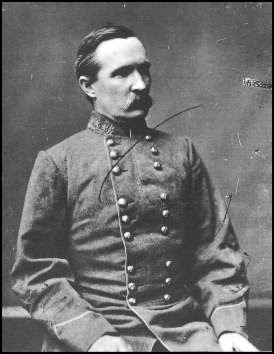
Colonel Daniel Fletcher Webster was killed August 30th 1862, while leading his men during the Second Battle of Bull Run [Second Manassas].

Daniel Fletcher Webster was born July 25th 1818 in Portsmouth, New Hampshire the son of the well-known politician Daniel and Grace (Fletcher) Webster.  He was known in the family as Fletcher.  He attended and graduated from Dartmouth College.  While Webster’s father was serving as the United States Secretary of State, he served as the Chief Clerk of the States Department.  While serving as the Chief Clerk, Webster delivered the news to Vice President John Tyler of President William Henry Harrison death.

When the Civil War started Webster resigned his job as the surveyor of the Port of Boston, and became the Colonel of the 12th Massachusetts Infantry.  The 12th was recruited in the Boston area and mustered into Union service July 11th 1861 and a three year regiment.  The first action was at the Battle of Cedar Mountain.  He was killed August 30th 1862 during the Second Battle of Bull Run.  Webster and the 12th were on Chinn Ridge, and he was riding along the lines encouraging the men to stay in line.  He was struck in the wrist, with the bullet passing into his chest, toppling him off his horse, his adjutant moved him into some bushes.  Webster was found by some Confederates, and knowing he was dying asked one of them, a Ludwell Hutchison of the 8th Virginia Infantry to take his wallet and return it to his family, which was done after the war.  After the battle Webster’s body was recovered and it was sent home for burial in the Winslow Cemetery in Marshfield, Massachusetts.

The 12th Massachusetts a part of the Army of the Potomac was known as “The Webster Regiment” in honor of their Colonel.  There is a plaque on a boulder near where Webster was killed on the Manassas Battlefield.

Thursday, August 29, 2013

A Small Battle At The Crossing

Union General Wesley Merritt
The Battle of Smithfield Crossing was fought in Jefferson and Berkeley Counties West Virginia August 29th 1864.

Two Confederate Divisions under the command of Lieutenant Jubal A Early crossed Opequon Creek August 29th 1864 at Smithfield Crossing.  They hit and forced Union General Wesley Merritt’s cavalry division back.  Then Union General James B Ricketts Infantry Division came in and stopped the Confederate advance.

The Battle at Smithfield Crossing was small with total casualties of about 300.

Monday, August 26, 2013

Perryville In The Indian Territory

The Battle of Perryville, fought August 26th 1863 in the Indian Territory, was an attempt to make a final defeat of the Confederates in the area.

Following the Union victory at Battle of Honey Springs in July 1863 Union Major General James Blunt of the Army of the Frontier marched out of Fort Gibson looking for Confederate Brigadier General William Steele’s force.  They found each other as Steele’s men were crossing the Canadian River.  The Confederates did not want to stand and fight, their defeat at Honey Springs had dispirited the men, there was a lack of supplies and they deserting en masse.

Steele made the decision to split his troops up.  He sent Confederate Brigadier General William Cabell’s Arkansas men to Fort Smith to hold a defensive position where he could be reinforced, Brigadier General Douglas Cooper’s Indian soldiers moved south to Perryville where they could be resupplied, and Colonel Chilly McIntosh was sent to the west to cover Cooper’s flanks.  Steele hoped that Blunt would pursue Cabell to Fort Smith, where he could be caught out in the open, but Blunt pursued Cooper’s men instead.

Perryville was a major Confederate supply depot located on the Texas Road.  Blunt hoped to attack and destroy Cooper’s 5,000 men and take their supply depot, and then he would turn on Cabell and Fort Smith.  Cooper posted a strong picket line that included two howitzers blocking the road into town.  The Union troops arrived near town and engaged the Confederates on the night of August 26th 1863.  Cooper had his men behind some barricades with artillery aimed on the road.  Blunt had his men deployed on either side of the road and brought up his own artillery.  The firing went on for a short time in the dark.  The Union hit so fast that there was no time to call in reinforcements, Cooper thought he might be surrounded and so retreated leaving the supplies behind for the Union troops.

Blunt took what supplies he could use and then had rest of things, along with the town burned.  The loss of the supply depot crippled the Confederate forces in the Indian Territory.

Sunday, August 25, 2013

We Can Beat Them Yet

Confederate General Henry Heth
The Second Battle of Ream’s Station was fought August 25th 1864 in Dinwiddie County, Virginia, a part of the Petersburg Campaign.

As the siege of Petersburg began to take hold, Union Lieutenant General Ulysses S Grant began to look for ways to break the railroad lines, and prevent supplies from reaching Confederate General Robert E Lee’s Confederates.  Grant wanted the Petersburg and Weldon Railroad, which ran into Wilmington, North Carolina, stopped and had sent Major General Winfield Scott Hancock’s II Corps in June and Major General Gouverneur K Warren’s V Corps against the railroad in early August.

On August 22nd 1864 Grant again sent out the II Corps along with a cavalry division under Brigadier General David M Gregg.  Gregg’s men drove off some Confederate pickets, and one of the II Corps division commanders, Brigadier General Nelson A Miles’ men destroyed the track to within 2 miles of Reams Station.  Early the next morning August 23rd 1864 another II Corps commanded Brigadier General John Gibbon took up position in some old earthworks located at Reams Station.  Lee couldn’t afford to lose the railroad supply line, and also Ream’s Station was the county seat and should they need it, a potential retreat route.  He sent in Confederate Lieutenant General A P Hill’s Corps which was being led at the time by General Henry Heth, along with two divisions of Major General Wade Hampton’s cavalry to drive them out.

On August 25th 1864 Union troops left their earthworks to destroy the last 5 miles of tracks.  Hancock had them recalled when Confederate cavalry approached.   Hill’s column had advanced down the Dinwiddie Stage Road, and at about 2 pm three infantry brigades led by Brigadier General Cadmus Wilcox launched an attack, but were driven back.  At about the same time some of Hampton’s cavalry had swept around the Union line, but were blocked by Gibbon’s division.  More of Hill’s Corps were brought up, and Confederate Colonel William Pregram’s artillery began firing on the Union position.  The final attack began around 5:30 pm, with the Confederates breaking through the northwest part of the Union fortifications.  Two Union regiments panicked and ran and the Confederates charged the earthworks.  Hancock galloped along the front of his men trying to rally his men; he said “We can beat them yet. Don't leave me, for God's sake!"  The Confederate cavalry at this point made a dismounted charge against Gibbon’s troops causing them to panic, and giving Hampton room to flank the Union line.  Hancock pulled together a counterattack that allowed the Union side to make a withdrawal back to Petersburg.

Union casualties were high, numbering about 2,750 along with 9 cannon and 12 stands of colors, while the Confederates lost only about 800.

Saturday, August 24, 2013

Contibuted To Loss At First Bull Run

Major General Robert Patterson
The Union Department of Pennsylvania was merged into the Department of the Shenandoah August 24th 1861, following the Union defeat at the First Battle of Bull Run.

The Department of Pennsylvania was established April 27th 1861, and covered the states of Delaware, Maryland, and Pennsylvania.  The Department was under the command of Union Major General Robert Patterson.  The force was made up of mostly of three month troops from New York, Pennsylvania and Wisconsin.  The men of the Department achieved an early tactical victory at the Battle of Hoke’s Run July 2nd 1861.  Patterson and his Department of Pennsylvania was held as indirectly contributing to the Union loss at the First Battle of Bull Run on July 21st 1861.

The Department was disbanded August 24th 1861.  Any of the regiments whose terms of enlistments weren’t up, and their commanders were merged into the Department of the Shenandoah under the command of Union Major General Nathaniel P Banks.  Patterson received an honorable discharge from the Union Army July 27th 1861.

Friday, August 23, 2013

Command Of A Storming Party

Union First Lieutenant John James Toffey received his commission to this rank in the 33rd New Jersey Infantry August 23rd 1863.

John James Toffey was born June 1st 1844 in Pawling, Duchess, New York.  He was the son of George A and Mary D (Cook) Toffey.

He joined the Union service as a Private August 28th 1862 in Company C of the 21st New Jersey Infantry, which was a nine month regiment.  When the 21st disbanded, Toffey received a commission as a First Lieutenant for Company G of the 33rd New Jersey Infantry on August 23rd 1863.  He served with them on November 23rd 1863 in the Battle of Missionary Ridge at Chattanooga, Tennessee.  It was during this battle that Toffey was awarded the Medal of Honor.  Do to wounds received Toffey was discharged on June 2nd 1864.  He reenlisted in the Veteran Reserve Corps serving as a Lieutenant until 1866.  It was while still in this service that Toffey was an eyewitness to Lincoln’s assassination, he would testify at the conspirator’s trial.

Following his military service Toffey became a County sheriff in Hudson County, New Jersey.  He served as New Jersey state treasurer, was an alderman in Jersey City, New Jersey, and was elected to the New Jersey State Legislature.  Toffey received his Medal of Honor September 10th 1897, the citation reads; “The President of the United States of America, in the name of Congress, takes pleasure in presenting the Medal of Honor to First Lieutenant (Infantry) John James Toffey, United States Army, for extraordinary heroism on 23 November 1863, while serving with Company G, 33d New Jersey Infantry, in action at Chattanooga, Tennessee. Although excused from duty on account of sickness, First Lieutenant Toffey went to the front in command of a storming party and with conspicuous gallantry participated in the assault of Missionary Ridge; was here wounded and permanently disabled.”  He died March 13th 1911 in Pawling, New York and is buried in the Pawling Cemetery.

Thursday, August 22, 2013

A Military Wine Dealer

Union General Henry Bohlen was killed August 22nd 1862 while his Brigade was on reconnaissance in Virginia.

Henry Bohlen was born October 22nd 1810 in Bremen, Germany, while his parents were traveling in Europe.  He attended a military college in Germany.  In 1832 when his parents returned to the United States, he was pulled out of school and did not complete his education.  Once in the United States Bohlen did very well by importing foreign liquors and wines.  When the Mexican American War started he volunteered as an Aide-de-Camp and saw some action under Major General Winfield Scott.  He returned to his business in Philadelphia, Pennsylvania after the war ended.  Bohlen traveled to Europe for his son’s health, serving with the French during the Crimean War.

Bohlen was living in the Netherlands when he heard of the surrender of Fort Sumter.  Returning to Philadelphia he began recruiting a mostly German regiment.  Bohlen was named the Colonel of the 75th Pennsylvania Infantry on September 30th 1861, serving in Union General Louis Blanker’s division.  He was promoted to Brigadier General April 28th 1862, and placed in command of the 3rd Brigade in Union General Carl Schurz’s Division.  During the 1862 Valley Campaign, his brigade covered the Union retreat from the Battle of Cross Keys, and saw action at the Battle of Cedar Mountain.  While on reconnaissance along the Rappahannock River before the Battle of Second Bull Run, Bohlen was shot in the chest, and killed by a Confederate sharpshooter as his Brigade was trying to cross the river on August 22nd 1862.  He is buried in the Laurel Hill Cemetery in Philadelphia, Pennsylvania.