Sunday, October 30, 2011

He Ordered The Great Train Chase

Union Major General Ormsby McKnight Mitchel who ordered the Great Locomotive Chase died October 30th 1862.

Ormsby McKnight Mitchel was born August 28th 1809-10 in Union County, Kentucky.  He grew up in Lebanon, Ohio where he worked as a clerk until receiving an appointment to West Point in 1825.  Mitchel graduated 15th out of 46 in 1829.  He stayed on at West Point for three years where he taught mathematics.  Mitchel passed the bar and became an attorney, before returning to teaching mathematics and natural philosophy at Cincinnati College.  In 1845 Mitchel was appointed director of the observatory at the College, which had the second largest refracting telescope in the world.  In 1859 he moved on the Dudley Observatory in Albany, New York, as their superintendent.

When the Civil War started Mitchel joined the Union army as a Brigadier General.  He commanded the Union Department of the Ohio from September to November 1861.  During this time Mitchel worked with James J Andrew to steal a train in Georgia to disrupt Confederate railroads, at the time Mitchel planned an attack on Chattanooga, Tennessee.  Although the plan failed and Andrew was captured and hanged the raid become known as “The Great Locomotive Chase”.  Mitchel led a division in the Army of the Ohio until July 1862.  He seized the city of Huntsville, Alabama without a shot being fired in April 1862.  He received a promotion to Major General for this.  Mitchel was place in command of Tenth Corps and the Department of the South at Hilton Head, South Carolina in September 1862.  He died in Beaufort, South Carolina of Yellow Fever October 30th 1862, and is buried in the Green Wood Cemetery in Brooklyn, New York.

Saturday, October 29, 2011

Fighting In The Dark

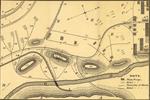
The Battle of Wauhatchie; a rare night battle was fought October 29th 1863 along the Georgia Tennessee boarder.

On October 28th 1863 Union General Joseph Hooker moved his soldiers through Lookout Valley.  He detached a division under Brigadier General John W Geary to Wauhatchie Station to protect his communications as well as the road to Kelley’s Ford.  Geary had about 1,500 men and was posted in an isolated area.  Confederate General James Longstreet determined to attack this Union force.  Longstreet ordered a night attack be made by Brigadier General Micah Jenkins.  At the same time Longstreet moved against Hooker to keep him from reinforcing Geary.

The battle was supposed to open by 10 pm on October 28th 1863, but was delayed until after midnight.  Geary was expecting an attack and had sent out pickets, but he was still surprised.  As the Union troops were hit from the north they formed a V-shaped battle line facing east and north.  When Hooker heard the sounds of the battle he ordered Union Major General Carl Schurz to march to Wauhatchie Station and reinforce Geary.  In the confusion however Union Brigadier General Adolph von Steinwehr got moving first.  Steinwehr’s men were fired on from a hill while passing Brown’s Ferry, and Hooker deployed more troops toward the area against Confederate Brigadier General Evander M Law.  With all this going on, no got out to Wauhatchie Station to help Geary.

Law held his hill top though he was heavily outnumbered.  After standing up to several assaults Law began a drawback, but just as his men were leaving their entrenchments the Union soldiers spilled in and captured some of the Confederates who hadn’t gotten the order to retreat.

Geary’s men were running low on ammunition, but were still holding tight.  Just as the Confederates were looking at victory they received information that Union reinforcement were arriving.  Jenkins broke off and retreated with the rest of the Confederates to Lookout Mountain.  In the fight at Wauhatchie Station the Confederates had losses that numbered 356.  Union casualties numbered 216; including Geary’s own son, an artillery lieutenant who died in his father’s arms.

Friday, October 28, 2011

Anti-Abolitionist Riots

The Boston Riot of October 28th 1835 occurred when a pro-slavery mob went looking British abolitionist George Thomas.

There were riots in New York City and Philadelphia in 1834 led by anti-abolitionist.  In early 1835 British abolitionist George Thompson and the poet John Greenleaf Whittier were stoned in Concord, New Hampshire by pro-slavery people.   In October 1835 Thompson was invited to speak at the Female Anti-Slavery Society of Boston, Massachusetts.  Boston was where William Lloyd Garrison published “The Liberator” a popular abolitionist newspaper.

A mob of anti-abolitionist formed October 28th 1835 and went to the Society looking for Thompson.  They found Garrison instead, tied him and dragged him by the rope through the streets.  Boston’s mayor rescued Garrison, and put him in jail for the night, for his own safety.

Thursday, October 27, 2011

Across The River At Brown's Ferry

Fought in Hamilton County, Tennessee, the Battle of Brown’s Ferry took place October 27th 1863.

After the Union defeat at the Battle of Chickamauga, the Army found itself trapped by Confederate General Braxton Bragg’s Army of Tennessee in Chattanooga, Tennessee.  Bragg settled in, to siege the Union position.  He sent Confederate Brigadier General Evander Law downstream, where Law was to stop any Union supply trains.  Union commander Brigadier General William S Rosecrans telegraphed Washington to say, "We have no certainty of holding our position here."  In response Washington sent reinforcements under the command of General Ulysses S Grant.

Grant started on October 26th 1863 to open a supply route from Brown’s Ferry to Chattanooga.  The planned route was designed by Chief Engineer, Brigadier General William F "Baldy" Smith.  The new supply line was named the “Cracker Line”, by soldiers who were running low on food.  Smith’s two brigades under Brigadier Generals William B Hazen and John B Turchin would split, with Turchin’s men marching across land to hold Brown’s Ferry, while Hazen’s would ferry down the river in pontoon boats.

Hazen’s troops made the landing point at 5 am on October 27th 1863.  Although they were moving quietly some of the men were fired on by Confederate pickets.  The Confederates quickly formed for an attack, however at this time Turchin’s men were being ferry across the river.  The combined force of Union men outflanked the Confederate soldiers who withdrew toward Wauhatchie.  By latter that afternoon the 1st Michigan Engineers had a pontoon bridge across river and open.

Wednesday, October 26, 2011

Protecting The West

Officially established on October 26th 1862, Camp Douglas in Utah was named for Stephen A Douglas.

It was necessary to recall regular army troop back from frontier duty when the Civil War started.  This left the overland mail route and telegraph open to attack from Indians.  Camp Douglas was a small garrison located about three miles east of Salt Lake City, Utah.  Union Colonel Patrick Edward Conner of the 3rd California Infantry was chosen to set up a camp in the Utah Territory, and he selected the site.  The Camp was named after late Illinois Senator Stephen A Douglas by Abraham Lincoln and was formally established on October 26th 1862.  The first winter the post was made up of quickly built dugouts.  Connor had troops from California and Nevada posted at the Camp during the Civil War.  It became the headquarters of the Department of the Pacific and the District of Utah.

Tuesday, October 25, 2011

A Charge On Springfield

The First Battle of Springfield [aka Zagonyi’s Charge] was fought October 25th 1861 in Green County, Missouri.

Union Major General John C Fremont made plans to push Confederate Major General Sterling Price’s troops out of Missouri and take the fight on south.  Fremont left St Louis, Missouri on October 7th 1861 with about 20,000 troops.  He also had a cavalry force of about 5,000 under Major Charles Zagonyi.  The cavalry was to ride in the front and scout for Fremont.

As the Union troops neared Springfield, Missouri, Confederate state guard commander Colonel Julian Frazier called for more soldiers.  Fremont stopped about 50 miles from Springfield on the Pomme De Terre River, but Zagonyi’s cavalry continued onto Springfield.  Frazier used his roughly 1,300 men to set up a trap on the road the Union cavalry was traveling to Springfield on.  Instead of ambushing Zagonyi’s horse soldiers, the Union troopers charged the Confederates.  Frazier’s men were routed.

Zagonyi continued into town, were the released Union prisoners.  Fearing a counterattack of Frazier’s Confederates, Zagonyi left Springfield before night fall.

Monday, October 24, 2011

The Little Gamecock


Confederate General James Jay Archer died October 24th 1864 from an illness he developed while a Prisoner of War.

James Jay Archer was born December 19th 1817 near Havre de Grace, Maryland the son of John and Ann [Stump] Archer.  He attended Princeton University; where he picked up the nickname “Sally” do to his small stature.  Archer graduated in 1835 and attending Bacon College in Georgetown, Kentucky he went on to study law at the University of Maryland.  He had a successful law practice going when the Mexican American War broke out.  Archer volunteered for service and was cited for bravery at Chapultepec, receiving a brevet to Major.  He moved to Texas following the war in 1848 were he was wounded in a duel.  Archer returned to law in Maryland, but decided in 1855 to join the United States Army as a Captain in 9th US Infantry.  He served mostly in the Pacific Northwest.

When the Civil War started Archer was at Fort Walla Walla in Washington Territory.  He resigned March 14th 1861, and shortly after was a member of the Confederate Army.  Archer was made a Colonel in the 5th Texas Infantry, and served with excellence at the Battle of Eltham’s Landing and Seven Pines.  On June 3rd 1862 he was promoted to Brigadier General and given command of three Tennessee regiments.  They fought as part of Major General A P Hill’s “Light Division” at Cedar Mountain and Second Bull Run, where he had a horse shot from under him.  His men called him “The Little Gamecock”.  Archer was to sick to ride a horse during the Maryland Campaign of September 1862, and led them from an ambulance.  His men contributed to the victories at the Battles of Fredericksburg and Chancellorsville.  By the summer of 1863 Archer’s brigade was part of Major General Henry Heth’s Division, A P Hill’s Corps.
On July 1st 1863 Archer was taken prisoner at the Battle of Gettysburg.  Union Private Patrick Maloney of the 2nd Wisconsin captured him, making Archer the first general to be captured in the Confederate army since General Robert E Lee took command.  Archer was sent to Johnson’s Island on Lake Erie where the Ohio winter cause his health to decline.  After a year at the Fort Johnson prisoner of war camp, Archer was sent with 600 other Confederate officers to Charleston Harbor.  He was exchanged late in the summer of 1864.  He rejoined the Confederate army on August 9th 1864 as part of the Army of Tennessee, but due to his poor health was order to Petersburg, Virginia.  He collapsed following the Battle of Peebles’ Farm.  Archer died October 24th 1864 in Richmond, Virginia and is buried Hollywood Cemetery.